Exceptional Offspring: Additive Foundations, Unicorn Synergies, and the Cultivation of Human Excellence
1. The Biological Foundation: Additive vs. Non-Additive Genetics
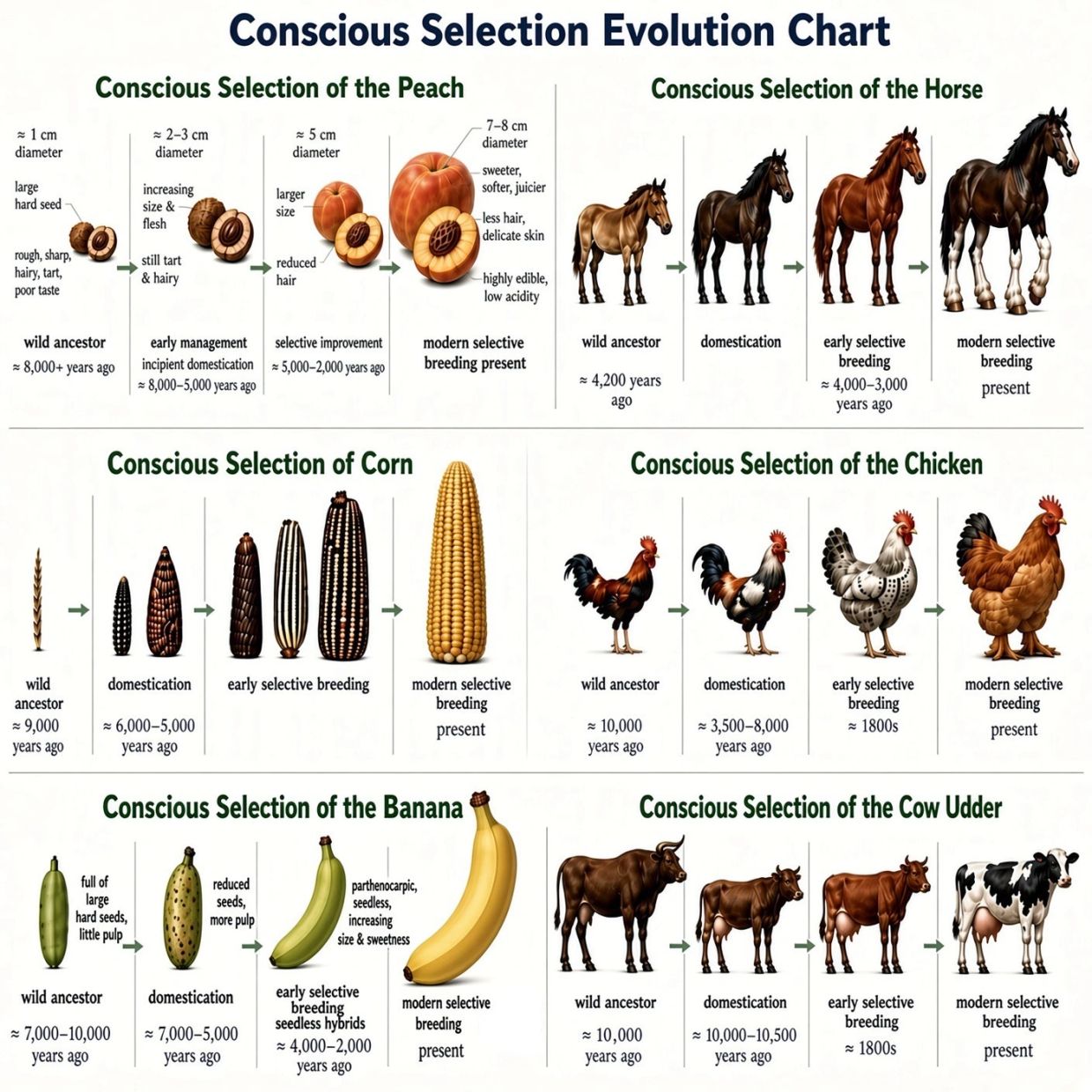
Animal breeding demonstrates what becomes possible when human intelligence partners with natural variation. To understand how exceptional traits emerge, we must look at the dual mechanisms of inheritance:
• Additive Genetic Effects: These are the straightforward “building block” parts of inheritance. Each favorable gene version (allele) from a parent adds a predictable little boost to a trait, and the offspring’s baseline performance is roughly the cumulative average of what the two parents contribute. These effects stack up reliably across generations and form the basis for General Combining Ability (GCA)—where an elite parent consistently produces better-than-average offspring, regardless of the mate.
• Non-Additive Genetic Effects: These are the interaction surprises, driven by phenomena like dominance (one allele masking another) or epistasis (genes working together in complex, nonlinear ways). These interactions only manifest in specific parent combinations, creating the extra "spark" known as Specific Combining Ability (SCA) and driving hybrid vigor (heterosis).
While additive effects give steady, predictable progress, non-additive interactions deliver occasional, spectacular breakthroughs ("unicorn" moments) that are rarer and less transmissible to the subsequent generation. Breeders prize both: the additive foundation provides stability and elevates the population floor, while the non-additive spark delivers peak individual performance and shatters expected ceilings.
2. The Chemistry of the Match: Sires, Dams, and Synergies
In livestock optimization, prize sires and dams succeed because they possess a proven track record measured through tools like Expected Progeny Differences (EPDs), Estimated Breeding Values (EBVs), and modern genomics (GE-EPDs).
Most elite individuals are additive superstars who consistently produce solid, reliable offspring across many mates. However, the true "unicorns"—offspring that drastically exceed expectations—occur when an elite sire is paired with a complementary dam whose genetics click perfectly.
The Mechanics of the Match: It is not strictly required for a dam to be a unicorn herself; Specific Combining Ability is entirely about the pairing. An additive superstar dam provides a strong, steady foundation, allowing the sire's unique alleles to interact and create genetic magic. When both parents possess interaction-prone alleles, the statistical odds of a breakthrough skyrocket. Careful mate selection is, at its core, the hunt for high-SCA combinations built upon a strong GCA foundation.
3. Translation to Human Lineages: The Arx Framework
This identical biological logic, elevated by modern insight, opens a practical path for the conscious advancement of ancestral Europoid lineages. Within the framework of Arx culture, this stewardship focuses on a deliberate amplification of both the steady additive foundation and the occasional non-additive spark.
When high-fitness couples choose to build large families, they create a wider arena of genetic recombination. Within this larger pool of full siblings (who share ~50% of their genes but receive different combinations), rare and magnificent synergies can manifest.
4. Phenotypic Expressions: Two Paths to Excellence
Every exceptional human trait can be achieved through both inheritance pathways. The distinction isn't which traits are additive versus non-additive, but rather how an individual arrives at a standout version of that trait. Additive effects accumulate building blocks steadily across generations, while non-additive synergies act as "quantum leaps" within a single generation.
A. Masculine Expressions (Androgen Receptor & Tissue Sensitivity Pathways)
• Muscle-Building Efficiency & Composition:
• The Additive Route: A child inherits a steady stack of favorable alleles from both parents—such as optimized baseline testosterone production and dense muscle fiber architecture—resulting in a reliably athletic individual who passes this foundation down predictably.
• The Non-Additive Route: A child inherits a standard baseline, but their specific paternal and maternal alleles click to form a rare epistatic network. The unique interaction between their specific androgen receptor variant and their IGF-1 promoter layout unlocks a disproportionate physical response to resistance training, creating a unicorn-level synergy of dense, lean muscle mass.
• Structural Masculinization & Secondary Characteristics:
• The Additive Route: Generational concentration of robust skeletal genes yields a predictably strong frame, classic jawline definition, and vocal depth across all male siblings.
• The Non-Additive Route: Rare interactions amplify a child's tissue-level response to pubertal hormonal signals. The face and skeletal structure respond far more vigorously than those of siblings with identical testosterone levels, producing a striking brow ridge, heavily defined jawline, and wide shoulder-to-hip "V-taper" that outshoots parental averages.
B. Feminine Expressions (Estrogen/Progesterone Dynamics & Metabolic Pathways)
• Metabolic Flexibility & Subcutaneous Composition:
• The Additive Route: Decades of assortative mating stack highly reliable genes for lipolysis and efficient energy management, ensuring female offspring predictably maintain a healthy, balanced feminine phenotype.
• The Non-Additive Route: Parents with average metabolic profiles produce an offspring whose unique genetic recombination creates a rare dominance or epistatic effect within the estrogen receptor alpha (ER\alpha) pathway. This specific pairing triggers an exceptionally efficient cellular energy management system that naturally prioritizes a lean waist and idealized fat distribution without restrictive deficits.
• Structural Grace & Endocrine Harmony:
• The Additive Route: Inherited structural alignment and narrow lower-back architecture reliably deliver graceful pelvic dimorphism, fluid posture, and highly efficient biomechanics.
• The Non-Additive Route: Unique allelic combinations click perfectly to optimize ovarian reserve preservation, precise hormonal feedback loops, and collagen-synthesis pathways. This yields exceptional dermal thickness and elasticity alongside profound physical and emotional resilience during major endocrine shifts.
C. Shared Universal Expressions (Developmental & Cognitive Breakthroughs)
• High Developmental Stability (Low Fluctuating Asymmetry):
• The Additive Route: Both parents possess an exceptionally low genetic load. Lacking disruptive mutations, the raw blueprints are clean, and development proceeds with predictable, balanced structural symmetry.
• The Non-Additive Route: The child inherits standard genetic variances, but a lucky pairing of maternal stress-resistance genes completely masks or compensates for a paternal vulnerability. The two genomes cover for each other so perfectly that the child achieves a level of flawless physical symmetry and developmental canalization that neither lineage explicitly guaranteed.
• Cognitive & Neuro-Hormonal Agility:
• The Additive Route: Stable, generationally compounded polygenic traits yield predictable high intelligence, executive function, and working memory.
• The Non-Additive Route: Rare gene-by-hormone interactions create localized cognitive breakthroughs. In males, this may express as heightened spatial reasoning and calculated risk management under acute pressure; in females, it can manifest as superior verbal processing, rapid contextual switching, and deep emotional resilience.
5. The Mathematical Necessity of Volume
Because additive traits are highly predictable, they manifest reliably across standard population sizes; the average of the parents is largely what the offspring receive. However, non-additive unicorn effects are inherently rare, less predictable, and obey the laws of strict probability. They become visible only when a trait significantly outshoots the expected parental averages.
Consequently, volume itself is a genetic strategy. The more children born to an elite parental stock, the higher the statistical probability that these rare, synergistic breakthroughs will occur and thrive. This mathematical reality is a core pillar of why Arx culture actively encourages pronatalism and supports large families within its arcologies through family-oriented design and alloparenting networks. Additive genes build the floor; non-additive synergies capture the ceiling.
6. Implementation: From Mating Traditions to Advanced Technology
Stewardship within Arx exists along a continuum of conscious choices, balancing traditional human bonds with cutting-edge methodology:
Natural and Assortative Mating
For many families, preservation and advancement mean natural conception within selective, high-trust communities. By relying on strong ancestral genetic architecture and deliberate assortative mating (like pairing with like), families naturally concentrate favorable additive genes to reliably elevate the community baseline.
Advanced Reproductive Options
To extend these possibilities, voluntary reproductive technologies are utilized as a natural extension of parental care. Gamete donors and surrogates allow elite genetics—particularly from individuals with proven high combining ability—to maximize their positive impact on the population. Many of these donors are themselves grown "exceptional offspring" who have reached maturity and demonstrated both strong GCA and high SCA potential. Prize sires and prize dames are simply the adult versions of these standouts.
Screening and Precision Selection
Where genetic sequencing and embryo screening are utilized, they serve to modestly tilt polygenic probabilities toward health, intelligence, and resilience within a family's natural variation. Over generations, even minor intentional shifts within this natural variance compound into massive population-wide advancements.
To maintain long-term stability, this outsized reproductive success is carefully balanced by continuous monitoring of effective population size, genetic load, and heterozygosity, ensuring that vital adaptive diversity is never sacrificed for short-term gains.
7. Historical Precedent and the Future of Evolution
The deliberate cultivation of talent is not entirely unprecedented. Historical talent hotspots—ranging from distinct European regional populations to elite merchant diasporas—achieved remarkable concentrations of human achievement. They did so through high-trust communities, a cultural reverence for excellence, and strong family formation. Modern tools simply make this compounding process clearer, faster, and infinitely more efficient, all while preserving the strictly voluntary, stewardship-driven nature of the effort.
Left unmanaged, global trends naturally favor regression to the mean and the steady dilution of the complex traits that built advanced civilization. Arx offers an intentional, opt-in alternative: pairing exceptional environments with a culture that celebrates family volume and high capability.
Within a few generations, the divergence becomes unmistakable. Exceptional offspring become more numerous not by coincidence, but through the deliberate expansion of high-quality births and thoughtful lineage care. The ultimate reward is a fit genetic distillation—Europoid lineages that grow stronger, more capable, and uniquely equipped for the future through the harmonious alignment of love, numbers, and intergenerational purpose.
8. The Catalyst: How Additive Selection Stacks the Deck for Synergies (Increasing the Odds of Creating Unicorns)
While additive foundations and non-additive breakthroughs are distinct genetic mechanisms, they do not operate in isolation. Relentless selection for the "building blocks" (additive traits) acts as a direct mathematical catalyst that increases the probability of capturing the "spark" (non-additive unicorn moments). Far from being a matter of pure chance, the frequency of rare genetic breakthroughs rises systematically as the baseline population is refined through strong additive selection.
This compounding effect occurs through three primary biological mechanisms:
A. Concentrating Interaction-Prone Alleles
Non-additive breakthroughs, particularly epistatic interactions, require highly specific gene variants to meet and recombine. If a standout phenotypic trait relies on distinct paternal and maternal alleles clicking together perfectly, those alleles must first exist in high frequency within the broader gene pool. Strong additive selection relentlessly filters out deleterious variants and concentrates premium, functional alleles. As their density increases within the population, the statistical probability that these elite pieces will recombine in a single offspring skyrockets.
B. Elevating the Phenotypic Floor
Non-additive synergies do not manifest in a vacuum; they build directly upon the existing structural framework of the organism.
• Without Additive Selection: If the baseline architecture of a lineage is weak or unmanaged, a positive non-additive interaction may merely rescue an offspring from mediocrity, bringing them up to a standard population average.
• With Additive Selection: When the underlying foundation is already highly optimized, the baseline floor is elevated. When a rare, non-additive breakthrough occurs on top of this elite foundation, it is not wasted on correcting structural flaws. Instead, it shatters the expected ceiling, producing a truly legendary tier of performance.
C. The Multiplier Effect (Epistatic Scaling)
Many non-additive interactions operate as multipliers rather than simple additions. For instance, a rare genetic synergy might manifest as a heightened cellular sensitivity to existing biological drivers, such as optimized hormonal signals or metabolic pathways. If generation-by-generation additive selection has already maximized those underlying baseline signals, the multiplying effect of a non-additive spark triggers an exponential leap. A genetic multiplier applied to a highly elevated baseline yields a vastly more spectacular outcome than the same multiplier applied to a depleted one.
The Evolutionary Strategy: Relentless additive selection permanently shifts the General Combining Ability (GCA) of the population upward. By doing so, it creates a highly concentrated genetic canvas that makes the discovery of high Specific Combining Ability (SCA) pairings vastly more frequent, predictable, and profound. In practical terms, families select additively to secure a permanent, resilient floor—but it is that exact process that systematically alters the mathematical odds to capture the true vanguard potential of the lineage.
9. Probability Matrices: Stacking the Odds Through Targeted Pairings
Because specific combining ability (SCA) is fundamentally driven by the unique genetic chemistry of a match, the structural profile of the parents directly alters the statistical probability of capturing non-additive breakthroughs. While a rare, synergistic "unicorn" moment can emerge from standard parents if their alleles happen to align perfectly, the mathematical odds of producing standout offspring shift dramatically depending on the parental pairing tier:
A. Non-Unicorn Pairings (Additive Superstar × Additive Superstar)
• The Odds: This tier offers the lowest statistical probability of a non-additive breakthrough, though it remains highly valuable for population stability.
• The Dynamic: When two steady, additive performers are paired, the match relies entirely on general combining ability (GCA). The offspring's traits will highly gravitate toward the parental average, shifting the population floor upward with high predictability. Any non-additive breakthrough is the result of random epistatic sorting rather than a structurally primed match.
B. One-Unicorn Pairings (Additive Superstar × Unicorn Standout)
• The Odds: The statistical probability of a breakthrough increases significantly within this matrix.
• The Dynamic: An additive superstar dam paired with a unicorn sire—or vice versa—provides a highly reliable biological foundation. The steady parent contributes a rock-solid, predictable baseline, while the unicorn parent introduces highly distinct, interaction-prone alleles. Because one half of the pairing is already genetically optimized for exceptional tissue sensitivity, metabolic flexibility, or structural symmetry, the specific combinations required for a breakthrough click together far more frequently.
C. Two-Unicorn Pairings (Unicorn Standout × Unicorn Standout)
• The Odds: This tier yields the absolute highest statistical probability of generating exceptional, non-additive offspring.
• The Dynamic: When two unicorn standouts are paired, the genetic lottery is heavily stacked. Both individuals bring unique, interaction-prone alleles to the pairing, maximizing the density of epistatic and dominance-driven potential in the genome. Rather than relying on a single parent to drive the synergy, both sides contribute complementary, highly responsive genetic networks that click together spectacularly far more often than in any other combination.
The Structural Reality: While a unicorn-by-unicorn match provides the most mathematically direct path to maximizing vanguard breakthroughs, it is not an absolute prerequisite. Specific combining ability remains inherently about the compatibility of the pairing. A steady additive performer possesses immense value; when matched with precision to the right complementary partner, her reliable foundation can unlock the exact genetic interactions needed to manifest the extraordinary.
10. Genetic Balance: Leveraging Heterosis While Minimizing Inbreeding Depression
The long-term advancement of a population requires balancing two competing genetic forces: maximizing the evolutionary advantages of hybrid vigor (heterosis) and mitigating the functional risks of inbreeding depression. Achieving this balance depends entirely on maintaining a large, diverse breeding pool characterized by varying alleles that achieve the exact same superior functions, managed through precision monitoring tools.
A. The Structural Advantages of Heterosis
While additive selection permanently shifts the baseline upward, heterosis (hybrid vigor) provides an immediate, non-additive boost to vitality, fertility, and developmental stability. When distinct, healthy lineages are paired, the offspring inherit highly diverse genetic combinations. This diversity masks minor, recessive deleterious mutations (dominance mechanisms) and unlocks optimal, multi-locus gene interactions (epistatic synergies). Within an elite lineage framework, heterosis does not change the core traits being cultivated; rather, it supercharges the physiological efficiency, immune resilience, and structural integrity of those traits.
B. Parallel Adaptation: Different Alleles, Identical Superior Functions
A sophisticated strategy involves cultivating distinct sub-lineages or "regional breeds" that have evolved separate genetic pathways to achieve the exact same premium phenotypes. When these distinct lines are eventually crossed, the offspring benefit from heterosis without compromising the intended functional excellence.
This dynamic is clearly illustrated by examining historical intra-Europoid tribal regional branches—such as the foundational ancestral groups of the Scandinavian peninsula:
• The Geats (Götar): Historically settling the southern plains and maritime borders of Sweden, this lineage traditionally adapted for robust bone density, exceptional lower-body power, and high metabolic efficiency suited for endurance across varied topography.
• The Swedes (Svear): Anchored in the fertile central valley and lake regions, this group concentrated alleles optimizing upper-body leverage, rapid neurological processing, and highly stable androgen pathways tailored for acute environmental stress.
• The Gotlanders (Gutar): Isolated in a unique Baltic maritime environment, this distinct branch developed highly specialized metabolic flexibility, superior dermal tissue integrity against harsh marine climates, and an exceptionally robust, specialized immune response.
Each of these branches independently arrived at exceptional health, structural strength, and high capability, but they did so using different allelic combinations. Targeted, conscious mixing between a Svear lineage and a Götar lineage does not dilute the ancestral architecture; instead, it creates a powerful intra-Europoid hybrid vigor. The offspring inherit the dense bone structure of the Geats alongside the optimal neuro-hormonal pathways of the Swedes, with the genetic distance between the sub-lineages triggering an immediate boost in overall vital response.
C. Precision Management of Inbreeding Depression
Without active management, pursuing elite phenotypic consistency can shrink the effective population size (N_e), leading to inbreeding depression—the accumulation of homozygous deleterious alleles that causes reduced fertility, compromised immunity, and fluctuating asymmetry.
To permanently prevent this degradation, the population utilizes advanced digital kinship matrices and genomic monitoring tools:
• Relationship Co-efficiency Matrices: Every potential pairing is filtered through multi-generational kinship software that calculates the exact coefficient of inbreeding (F). Pairings that exceed strict safety thresholds are restricted, ensuring that parental pairs remain sufficiently distant to avoid homozygosity for harmful recessives.
• Heterozygosity Mapping: Genomic sequencing explicitly tracks the preservation of genetic diversity across critical areas, such as the Major Histocompatibility Complex (MHC) and metabolic regulatory networks, ensuring the population's immune engine remains robust.
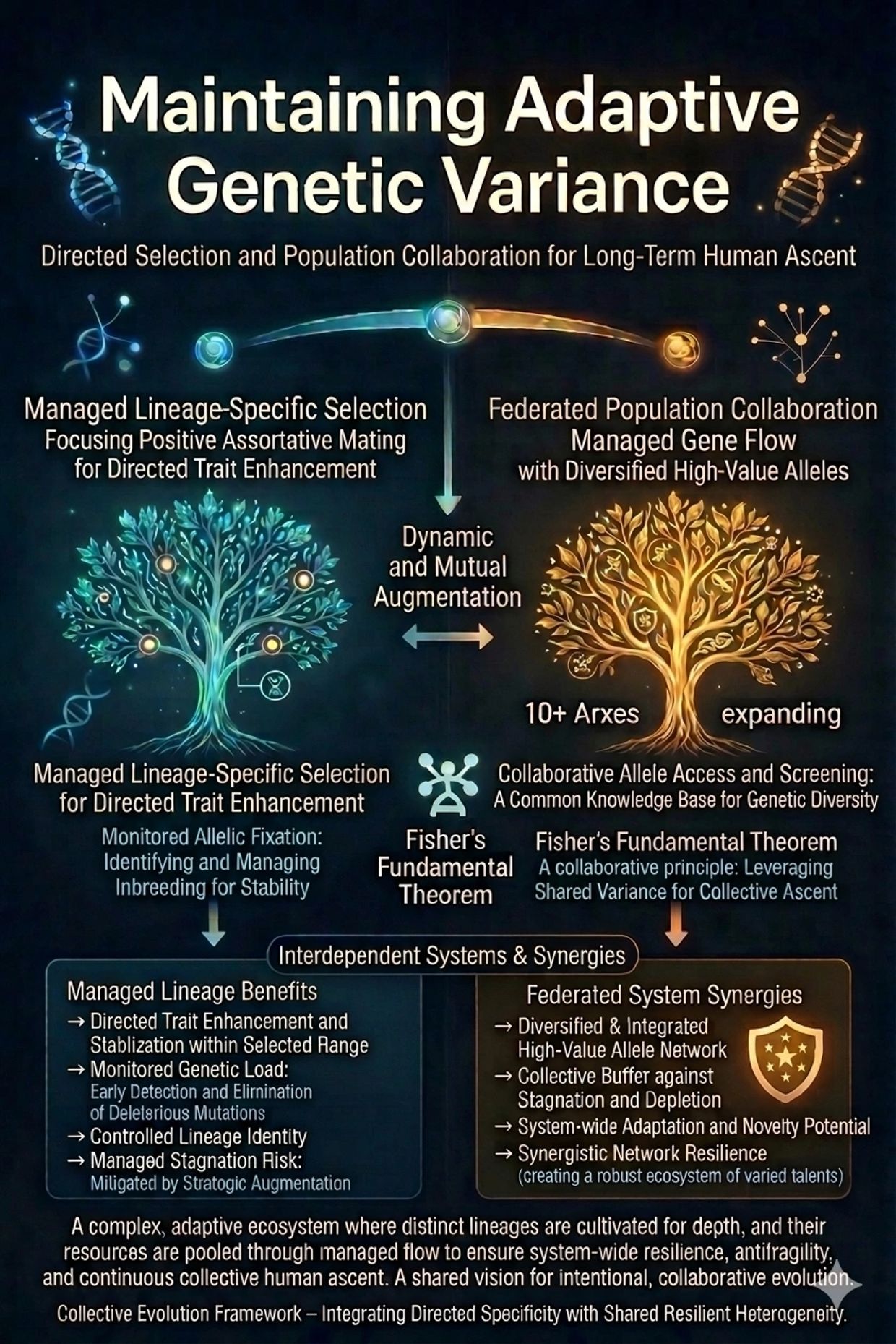
• Parallel Pool Rotation: The community maintains multiple, geographically distinct breeding groups—all selected for the same high standards of intelligence, health, and resilience. Regular, planned rotations of gametes and individuals between these parallel pools inject fresh, variant alleles into local lineages, permanently driving heterosis while keeping the overall genetic load near zero.
The Integrated Principle: Within this system, diversity is not sought through external, non-compatible dilution, but through the deliberate, parallel cultivation of distinct sub-branches within the ancestral Europoid matrix. By maintaining a vast array of varying alleles that serve the same high capability, and managing those lines with digital relationship matrices, the population captures the full, radiant power of the "unicorn" spark while anchoring a permanent, unshakeable foundation of biological health.
11. Evolutionary Misalignment: The Structural Risks of Interracial Hybridization
While targeted crosses between closely related sub-lineages (such as parallel intra-Europoid branches) maximize heterosis without disrupting functional architecture, wide-cross interracial hybridization introduces severe biological, phenotypic, and evolutionary risks. When populations have spent tens of thousands of years adapting to fundamentally distinct ecological niches, climate pressures, and socio-cultural demands, their genetic architectures diverge down completely different evolutionary paths. Attempting to bridge these vast distances disrupts highly specialized, co-adapted gene complexes, introducing several critical vulnerabilities.
A. The Disruption of Co-Adapted Gene Complexes
Evolution does not merely select for isolated genes; it selects for complex networks of alleles that work harmoniously together, known as co-adapted gene complexes. Over millennia, distinct populations independently optimize internal regulatory systems, endocrine pathways, neurological architectures, and skeletal structures to function as a unified, balanced machine.
Wide-cross hybridization shears these integrated systems apart. When alleles that evolved to function within one systemic framework are paired with alleles from a fundamentally different ancestral lineage, the internal "chemistry" can misalign. This can manifest as dysregulation in hormone receptor pathways, structural mismatches in skeletal or dental alignment, and disruptions to metabolic efficiency, as the component parts no longer share a synchronized evolutionary history.
B. Massive Outbreeding Depression and Regression to the Mean
For complex, highly polygenic traits—such as cognitive architecture, metabolic stability, temperament, and subtle aesthetic symmetries—wide crosses consistently trigger a steep regression to a lower global baseline.
Because these highly valued human traits are built upon hundreds or thousands of genes working in precise, additive and non-additive harmony, mixing highly divergent lineages dismantles the unique allelic concentrations required to sustain peak expressions of capability and form. Instead of capturing the unique strengths of both heritages, the offspring's phenotypes frequently regress toward a homogenized genetic mean, diluting the highly specialized variations that built distinct, complex civilizations.
C. The F1 Fallacy and F2 Epistatic Breakdown
The immediate offspring of a wide cross (the F_1 generation) can occasionally exhibit a transient, superficial burst of hybrid vigor, primarily due to the universal masking of recessive deleterious mutations. However, from a multi-generational lineage perspective, this effect is a biological illusion that quickly fades.
The true genetic crisis manifests in the subsequent generations (F_2, F_3, and beyond). During the process of genetic recombination in the F_2 generation, the parental chromosomes are broken apart and shuffled. It is here that epistatic breakdown occurs: the highly refined, generationally curated gene networks of both ancestral lineages are permanently fragmented. Once this structural cohesion is lost, the population is frequently left with a significantly lower phenotypic mean, characterized by increased fluctuating asymmetry, metabolic instability, and a dramatic reduction in overall population uniformity.
D. The Absence of Synergistic Gain for High-Order Traits
There is no reliable or reproducible evidence that wide-cross hybridization yields true heterosis for high-order, complex traits like abstract intelligence, emotional stability, or executive function.
While simple biological traits (like resistance to a specific regional pathogen) can benefit from the introduction of novel alleles, advanced cognitive architecture relies on highly specific, tightly integrated neural networks and metabolic support systems. Because these complex systems require meticulous generational cultivation and extreme internal alignment, wide-cross mixing introduces genetic turbulence rather than synergy.
The Preservation Imperative: True evolutionary stewardship recognizes that exceptional traits are rare, fragile, and exceptionally difficult to cultivate, but remarkably easy to dilute. For a population committed to the conscious advancement of ancestral Europoid lineages, wide-cross hybridization represents an irreversible loss of unique genetic information. By maintaining the distinct, co-adapted architecture of the lineage and focusing exclusively on intra-branch harmony, the community preserves the precise biological integrity required to reliably foster the next vanguard of human excellence.
12. The Crucible of Recombination: The Hybrid Swarm
To fully grasp the multi-generational trajectory of a population, one must look at the ultimate destination of unmanaged genetic mixing: the formation of a hybrid swarm. In evolutionary biology, a hybrid swarm is a population where the lines between distinct groups have completely blurred due to extensive, multi-generational interbreeding. Instead of a single, clean cross, it creates a chaotic genetic soup consisting of a highly variable mix of initial hybrids, subsequent generations, and complex backcrosses.
While the mechanics of a hybrid swarm are identical regardless of the groups involved, the evolutionary outcome changes entirely depending on genetic distance. When applied to distinct intra-Europoid lineages, managed recombination acts as a powerful engine for adaptive evolution; when applied interracially, it acts as a mechanism of irreversible genetic extinction.
Why Intrabranch Recombination Creates a Fit Kinetic Distillation
When closely related regional sub-branches—such as parallel ancestral groups within the Europoid matrix—engage in managed genetic exchange, the resulting recombination functions as an optimal raw material for evolution.
Because these sub-branches share a deeply compatible core architectural framework, their alleles can shuffle smoothly without inducing systemic misalignment. This highly adaptive crucible allows the population to capture localized advantages—such as a specific metabolic optimization from one branch or a structural density from another—and seamlessly integrate them into the collective pool. The result is not the destruction of the lineage, but its fortification. The baseline is enriched with a diverse pool of novel, highly functional genetic combinations that possess superior fitness, driving continuous vertical ascension while preserving the fundamental identity of the population.
Why Interracial Shuffling Causes Irreversible Genetic Swamping
Conversely, when wide-cross interracial hybridization is left unmanaged across global populations, the secondary contact and subsequent breakdown of reproductive barriers inevitably trigger the most destructive consequence of a hybrid swarm: reverse speciation and the permanent loss of unique biodiversity.
When highly divergent human populations are thoroughly and continuously shuffled, the process leads directly to genetic panmixia—a state where original, specialized parental genotypes are completely dismantled. Over generations, the distinct, highly evolved variations that built complex, unique civilizations are thoroughly blended into a continuous, homogenized spectrum of variation.
The critical danger of this dynamic is genetic swamping. If the undifferentiated hybrid swarm completely replaces the original parent populations, it leads directly to the evolutionary extinction of the distinct lineages themselves. The unique genetic information, co-adapted gene complexes, and refined ancestral traits are not preserved; they are permanently diluted and erased from the human story.
The Definitive Choice: The formation of a hybrid swarm is a chaotic, irreversible crucible. Within the conscious framework of Arx culture, the strategy is clear: reject the global trend toward chaotic panmixia and interracial dilution, which can only result in genetic swamping and a lower global mean. Instead, by limiting recombination to targeted, compatible intra-Europoid branches, the community harnesses the full adaptive power of genetic novelty while permanently anchoring the distinct, irreplaceable biological heritage of the lineage.
13. E Pluribus Unum: America as the Archetypal Intra-Europoid Hybrid Swarm
The philosophical and historical blueprint for this selective integration is woven directly into the foundational fabric of the West, most visibly demonstrated by the historical trajectory of the United States. The founding national motto, E Pluribus Unum—"Out of Many, One"—was originally conceived to denote the political unification of thirteen distinct colonies into a single sovereign nation. However, as the young republic matured and its unique demographic identity crystallized, the phrase underwent a profound evolutionary shift. It transformed from a purely administrative designation into an explicit process of ethnogenesis—the birth of a distinct, unified people from a highly successful, intra-Europoid biological synthesis.
Colonial Unification to Ethnogenesis: The American Crucible and Lessons for Sovereign Lineages
E Pluribus Unum—“Out of many, one”—began as the motto of political federation. In 1782, as the Great Seal took shape, it captured the union of the Thirteen Colonies into a single sovereign republic. Thirteen letters for thirteen states. Thirteen stripes on the flag. Out of disparate entities emerged one nation capable of self-governance, expansion, and endurance.
This political unification seeded something deeper: ethnogenesis—the birth of a distinct American people. Early settlers, overwhelmingly from Northwest European stocks (English, Scots-Irish, German, Dutch, Scandinavian, and related lineages), faced a harsh continent. Through intermarriage, frontier selection, shared language, Protestant work ethic, English common law, and relentless practical demands, they forged a new composite identity. What Crèvecoeur described in 1782 as individuals of European nations “melted into a new race of men” was not abstract poetry but observable reality: a hardy, innovative people adapted to liberty, mobility, and high-trust cooperation.
The Mechanism of American Ethnogenesis
Early U.S. policy and culture reinforced this process. The 1790 Naturalization Act limited citizenship to free White persons of European descent. Immigration flowed primarily from compatible Northwest European sources. Intermarriage blended regional European subtypes while maintaining overall continental coherence. Thinkers like Emerson and Turner saw the frontier as a crucible: Old World particularisms fused into an American type—more egalitarian in manners, future-oriented, and antifragile. Leaders such as Theodore Roosevelt celebrated this hybrid vigor, provided it occurred within European-descended groups capable of full assimilation into the founding stock’s norms.
Quotas in the 1920s later protected this demographic core, prioritizing Northern and Western European inflows to sustain the balance that had produced results. This was not hatred of the “other” but prudent stewardship: preserving the human capital that built the republic. The result was a people who tamed a continent, industrialized at unprecedented speed, and projected power globally—outcomes rooted in the heritable traits, culture, and cohesion of that Northwest European-derived foundation.
From Unum to Fragmentation—and the Path Forward
Success invited its own challenges. Later reinterpretations of the melting pot expanded it beyond European compatibility into a universal solvent. Post-1965 policy shifts accelerated non-European inflows, while ideological multiculturalism reframed cohesion as oppression and diversity as an end in itself. What began as ethnogenesis within a high-trust, evolutionarily aligned stock became diluted. Persistent patterns in social trust, achievement gaps, crime, and political polarization reveal the limits of pretending all admixtures produce equivalent outcomes. Regression to the mean, heritability of civilizational traits, and the fragility of high-trust societies under rapid, dissimilar demographic change are not moral failings—they are biological and historical realities.
Arx draws the clear lesson. Sovereign arcologies are not nostalgic reenactments but forward evolution. We honor the American crucible by applying its proven principles deliberately:
• Selective Foundations: Prioritize phenotypic, cultural, and genetic coherence among Europoid lineages for multi-generational ascent. Hybrid vigor has limits; assortative pairing and conscious stewardship amplify strengths.
• Structured Ethnogenesis: Intentional communities with life-guide pyramids, pod mentoring, and alloparenting create elevated conditions for offspring—far beyond accidental frontier mixing.
• Exit and Agency: Voluntarism with right of exit replaces imposed diversity. Merit, beauty, truth, and lineage stewardship as north stars.
• Incubator Model: Arx as “humanity’s evolution hospital”—refining what worked in the American experiment while correcting the later dilutions. A network union of private foundries, under host title, whose reproductive mission may be specified lineages can pursue conscious evolution without apology.
The American story proves that out of many compatible peoples can emerge one stronger people. Arx does not reject this history; it radicalizes it. We move from accidental colonial unification to deliberate, sovereign ethnogenesis—building arcologies that preserve, refine, and transcend the best of the West for millennia ahead.
This is not supremacism. It is stewardship of light forms against entropy. The Divine Matrix rewards those who align with reality, heritability, and beauty. Join the lineages rising.
The Intentional Synthesis of Northwest European Stock
Throughout the nineteenth and early twentieth centuries, as the immense productivity, structural capability, and civic resilience of the foundational population became undeniable, American immigration frameworks explicitly reflected a desire to preserve and refine this specific biological substrate. Early statutory parameters and subsequent national-origins frameworks were purposefully engineered to draw almost exclusively from the distinct regional branches of Northwest Europe.
Under this deliberate structure, E Pluribus Unum assumed its true, localized biological meaning: out of many distinct Germanic, Celtic, and Nordic regional nations, a profound process of ethnogenesis occurred, forging a highly specialized, unified new breed—the Americans. This was not a random or chaotic blending, but a highly targeted convergence of closely related, genetically compatible sub-lineages.
This biological preference was formally codified through the Immigration Act of 1924 (the Johnson-Reed Act), which established a strict National Origins Formula. By deliberately tying immigration quotas to the 1890 census—a period before major demographic shifts occurred—the law legally guaranteed that 85% of all available visas were allocated exclusively to Northern and Western European nations. This legislative framework acted as a conscious structural barrier, ensuring the American frontier crucible remained a highly concentrated, intra-Northwest Europoid environment optimized for stable genetic integration.
The Controlled Hybrid Swarm of the American Frontier
In the language of evolutionary biology, early America functioned as a pristine, continental-scale crucible—a carefully bounded and highly selective hybrid swarm. The frontier environment created a massive secondary contact zone where previously isolated intra-Europoid branches—each possessing localized adaptations for endurance, spatial reasoning, administrative order, and high developmental stability—were brought into continuous contact.
Because the reproductive barriers between these closely related ancestral branches were dismantled in a shared, high-trust civic environment, the parental genotypes shuffled smoothly. Rather than suffering from the systemic misalignment or epistatic breakdowns associated with wide interracial crosses, this specific recombination unlocked the full, radiant power of intra-branch heterosis.
The resulting American breed exhibited an immediate, compounding burst of vital energy, characterized by robust physical stature, exceptional innovative capacity, and an aggressive frontier drive. The ancestral architectures did not dilute one another; instead, they achieved a fit distillation, catalyzing an organic ethnogenesis that forged a highly compatible, diverse pool of novel genetic combinations uniquely equipped to conquer a continent and build a complex, advanced civilization.
The Historical Lesson for Arx: The early American miracle provides historical verification of the Arx genetic model. It proves that a hybrid swarm is not inherently destructive; when strictly limited to highly compatible, closely related sub-branches of a shared ancestral matrix, the resulting recombination serves as the ultimate engine for adaptive evolution and successful ethnogenesis. By explicitly reviving this selective, intra-Europoid framework within its arcologies, Arx does not innovate from a vacuum—it simply reclaims and accelerates the exact compounding process that forged the vanguard lineages of the modern world.
Arx Revolution: From many compatible roots, one sovereign ascent.