Arx: Civilization Upgraded. The Decentralized Blueprint for a Free Society.

Arx Revolution

Arx RevolutionArx RevolutionArx Revolution
Home
Arx as Incubator
About
FAQ
Defining the Revolution
Foundational Principles
Organization
Revitalizing Small Towns
Sociological Architecture
Humanoid Robots in Arx
Operational Framework
Genetic Concepts
Trait Amplification
Who Is Arx for?
Join Us
Why Lineage?
Privacy Policy

Arx Revolution

Arx RevolutionArx RevolutionArx Revolution
Home
Arx as Incubator
About
FAQ
Defining the Revolution
Foundational Principles
Organization
Revitalizing Small Towns
Sociological Architecture
Humanoid Robots in Arx
Operational Framework
Genetic Concepts
Trait Amplification
Who Is Arx for?
Join Us
Why Lineage?
Privacy Policy
More
  • Home
  • Arx as Incubator
  • About
  • FAQ
  • Defining the Revolution
  • Foundational Principles
  • Organization
  • Revitalizing Small Towns
  • Sociological Architecture
  • Humanoid Robots in Arx
  • Operational Framework
  • Genetic Concepts
  • Trait Amplification
  • Who Is Arx for?
  • Join Us
  • Why Lineage?
  • Privacy Policy

  • Home
  • Arx as Incubator
  • About
  • FAQ
  • Defining the Revolution
  • Foundational Principles
  • Organization
  • Revitalizing Small Towns
  • Sociological Architecture
  • Humanoid Robots in Arx
  • Operational Framework
  • Genetic Concepts
  • Trait Amplification
  • Who Is Arx for?
  • Join Us
  • Why Lineage?
  • Privacy Policy

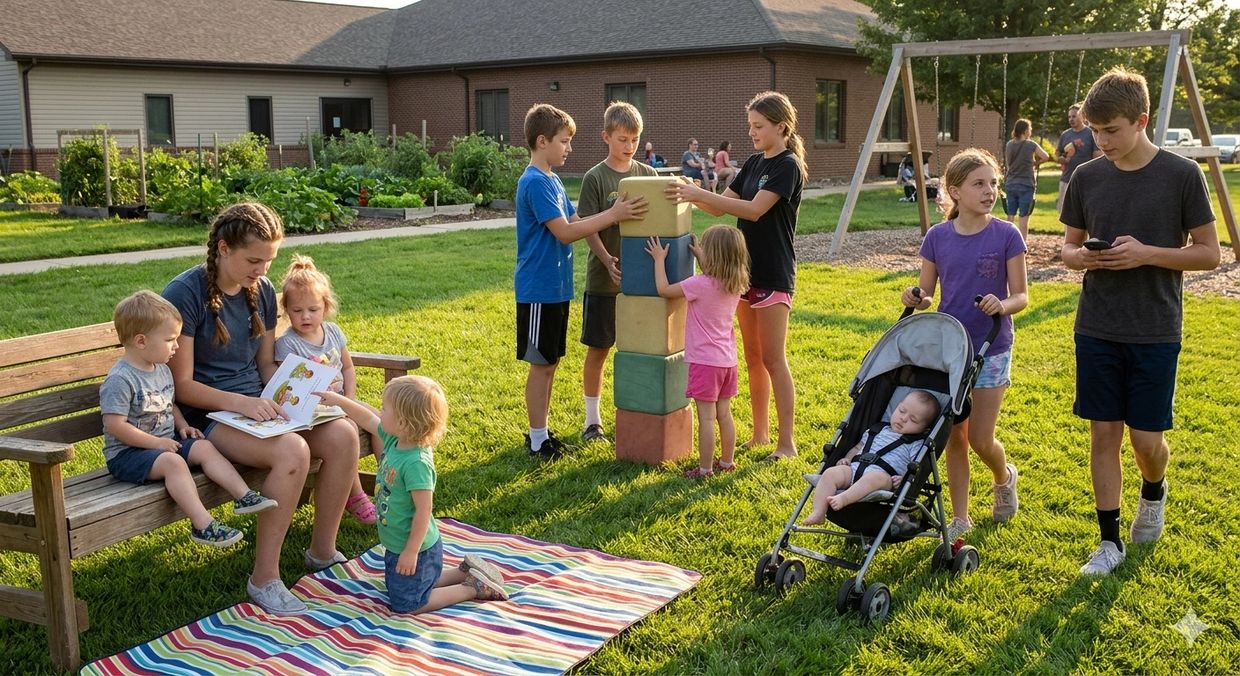
Alloparenting means a child is raised by a broader network of family and trusted community members, ensuring that the responsibilities of childcare, guidance, and support are shared rather than falling solely on the biological parents.


Arx Revolution

Alloparenting in the Arx Framework

Alloparenting in the Arx Framework

In the Arx societal model, alloparenting—the cooperative rearing of offspring by individuals other than biological or primary parents—forms the foundational architecture of child development. Rather than relying on isolated nuclear families, Arx distributes caregiving across a specialized, communal network of life guides, pod mentors, peer cohorts, and intergenerational participants. This system transforms alloparenting from a supplementary practice (common in many human societies and primate groups) into a fully optimized, evidence-informed framework that prioritizes developmental outcomes, resource efficiency, and deep social cohesion.


At its core, Arx replaces traditional parental exclusivity with structured, professionalized caregiving roles calibrated to each stage of psychosocial growth. Life guides—experts dedicated to specific age bands—guide cohorts through a progressive pyramid of support, providing intensive care in early years and gradually fostering independence. Complementing this are pod mentors, experienced elders who offer lifelong continuity akin to grandparents, while pods of four (built from twin-pair bonds) create enduring sibling-like units. Offspring themselves actively participate as caregivers to younger cohorts, creating reciprocal, multi-generational involvement. Additional mechanisms—such as reunions with past and future guides, biofeedback-supported milestone tracking, and environments aligned with Erik Erikson’s psychosocial stages—ensure secure attachment and resilience amid the system’s structured transitions.


This alloparenting approach delivers several interlocking advantages:

•  Developmental Precision: High guide-to-offspring ratios in infancy taper deliberately as children gain autonomy, matching real-world professional childcare standards while scaling effectively across an entire society.

•  Relational Stability: Pod mentors and cross-cohort interactions provide consistent emotional anchors, mitigating potential disruptions from age-based transitions and building a broad network of secure bases.

•  Equity and Efficiency: Every adult contributes meaningfully through specialized roles, with calculations ensuring balanced lifetime impact regardless of the age group served. Experienced individuals transition into mentorship, maximizing human capital.

•  Cultural Transmission and Belonging: Shared pods, intergenerational events, and active offspring participation instill a profound sense of collective identity and extended family dynamics from birth onward.


The following sections explore the mechanics and rationale of this system in detail: the Life Guide Pyramid’s resource distribution, the enduring role of pod mentors, strategies for secure attachment and Eriksonian development, the function of guide reunions and festivals, quantitative estimates of caregiving impact, and the vital contributions of offspring themselves to intergenerational care.

Through deliberate design, Arx demonstrates how alloparenting, when elevated to a societal cornerstone, can produce healthier, more connected individuals while enabling the community to thrive as an integrated whole. This framework stands as a practical vision for reimagining human development beyond the constraints of traditional family structures.

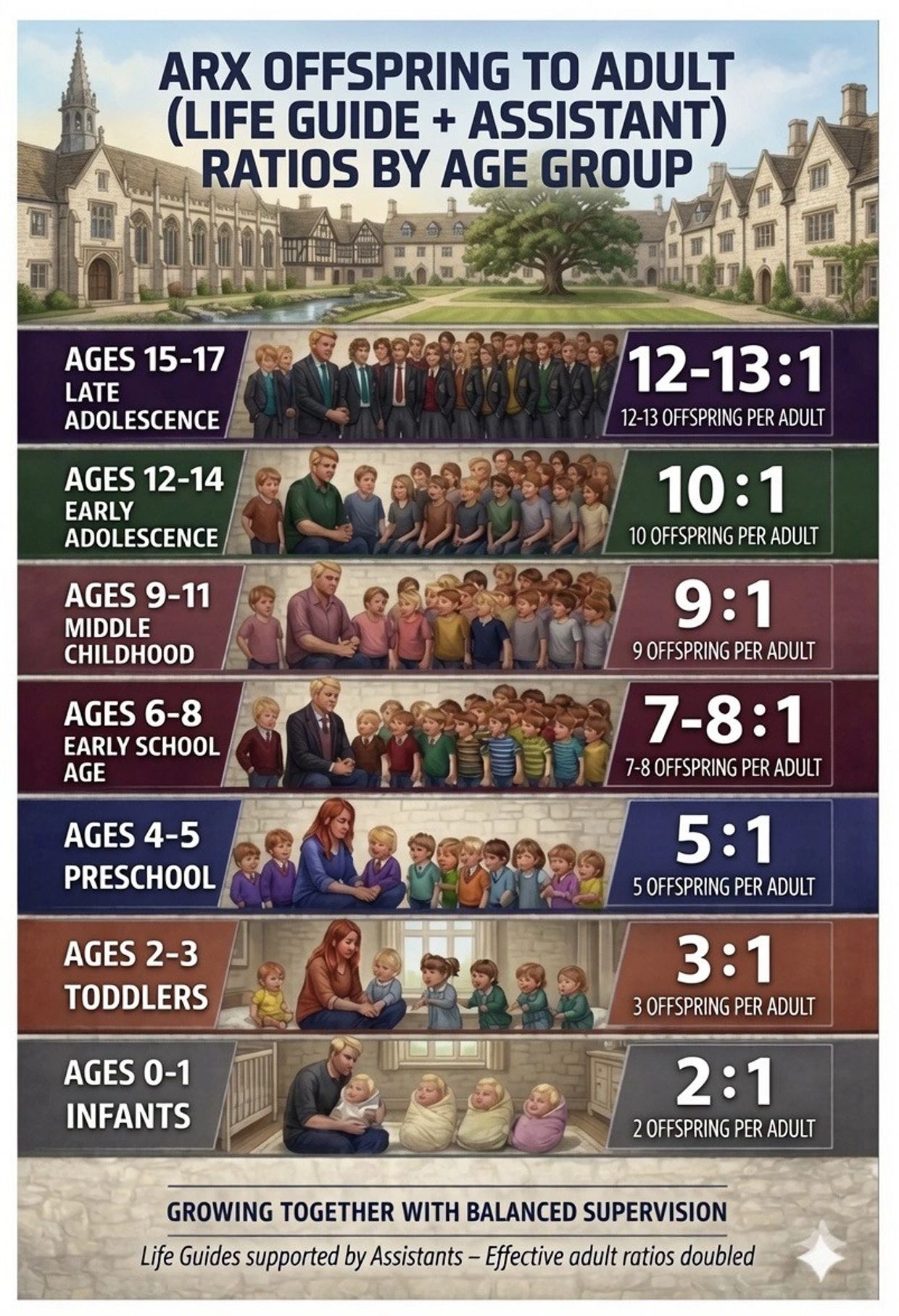
Life Guide to offspring ratios

Life Guide Pyramid

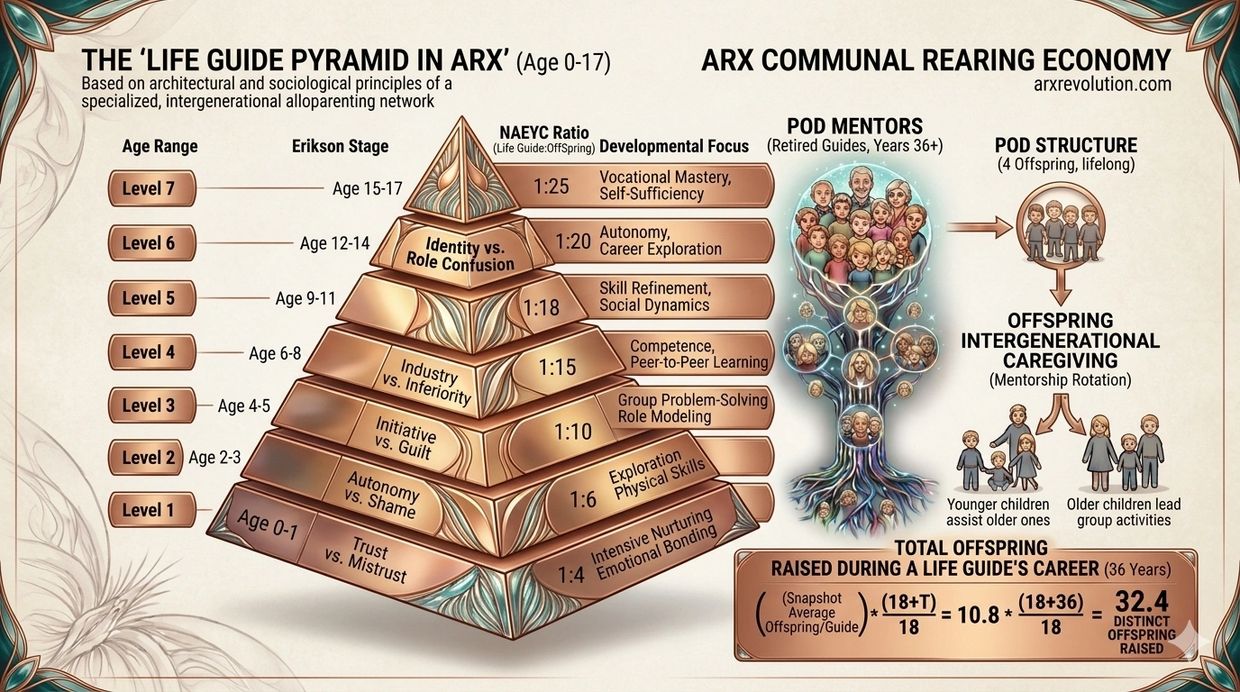
The Life Guide Pyramid in Arx: A Structured Approach to Communal Offspring Rearing


In the societal framework of Arx, traditional parental roles are supplanted by a system of life guides, specialized caregivers who dedicate their expertise to specific developmental stages of offspring. This model operates on a cohort-based progression, wherein groups of offspring advance collectively through age-specific guidance phases. Central to this system is the concept of the “life guide pyramid,” a metaphorical representation that illustrates the distribution of life guides across age groups. Unlike hierarchical structures that imply authority or power differentials, this pyramid solely depicts the quantitative allocation of resources, with a broader base of life guides supporting younger offspring and a narrower apex for older ones. This essay examines the formation and implications of the life guide pyramid, highlighting how varying ratios of guides to offspring optimize communal rearing efficiency.


Life guides are allocated across age-specific groups with ratios that decrease as offspring mature, reflecting real-world childcare guidelines to optimize developmental support. To estimate the average number of offspring raised by each life guide over specified periods, this analysis draws upon recommended staff-to-child ratios from established sources, such as the National Association for the Education of Young Children (NAEYC) for early years and extensions based on after-school and youth program standards for older ages. These ratios inform a steady-state calculation where the average is derived by dividing the total distinct offspring raised during the period by the total number of life guides.

Methodology and Assumptions

The estimation models 18 years of development (from age 0 to 17) with grouped age-specific ratios (children per adult), aligned with guidelines:

•  Ages 0–1: 4 children per adult (infant care standards).

•  Ages 2–3: 6 children per adult (toddler standards).

•  Ages 4–5: 10 children per adult (preschool standards).

•  Ages 6–8: 15 children per adult (early school-age standards).

•  Ages 9–11: 18 children per adult (mid-school-age extensions).

•  Ages 12–14: 20 children per adult (adolescent program standards).

•  Ages 15–17: 25 children per adult (youth group standards for teenagers).

In a steady-state system with constant cohort sizes, the snapshot average offspring per life guide is approximately 10.8, calculated as 18 divided by the sum of reciprocals of the ratios across the 18 years. Over a period of T years, the total distinct offspring raised accounts for both ongoing and new cohorts, yielding an average per life guide of this snapshot value multiplied by (18 + T)/18.

Estimates

•  Over 18 years: The average number of offspring raised per life guide is approximately 16, reflecting the distinct individuals cared for across one cohort cycle in the system.

•  Over 36 years: The average increases to approximately 32, encompassing two full cohort cycles and aligning with the transition point for life guides to pod mentor roles.

These figures represent the combined averages across different age group life guides, as varying age-group ratios are balanced in the aggregate calculation. Actual implementations in Arx may adjust based on specific cohort dynamics or refined guidelines, but this provides a grounded estimate rooted in professional childcare standards.


The foundation of the life guide pyramid is rooted in the developmental needs of offspring at different life stages. For infants, who require intensive, individualized attention to ensure physical survival, emotional bonding, and basic skill acquisition, the ratio of life guides to offspring is maintained at its highest level. This dense allocation acknowledges the vulnerabilities inherent in early childhood, where constant supervision, feeding, and nurturing are essential. As a result, a significant proportion of Arx’s adult population is engaged in infant guidance, forming the expansive base of the pyramid. This concentration ensures that foundational developmental milestones are met with precision, mitigating risks and fostering a stable cohort from the outset.

As cohorts mature and transition to subsequent age groups—such as toddlers, children, and pre-adolescents—the ratio of life guides to offspring gradually diminishes. This progression reflects the evolving capabilities of the offspring, who begin to exhibit greater independence, social interaction, and cognitive growth. Life guides in these intermediate stages specialize in facilitating group dynamics, educational foundations, and skill-building activities tailored to the cohort’s advancing needs. The tapering of the pyramid at these levels is deliberate, allowing life guides to oversee larger groups without compromising quality. For instance, while infant guides might manage ratios as low as one-to-one or one-to-two, mid-stage guides could effectively handle one-to-five or higher, leveraging the offspring’s emerging self-reliance to promote peer learning and collective responsibility.

At the pyramid’s apex, encompassing the teenage years, the life guide to offspring ratio reaches its lowest point. Adolescents in Arx, approaching maturity, benefit from guidance that emphasizes autonomy, decision-making, and preparation for adult roles. Here, a smaller number of specialized life guides suffices for much larger cohorts, as the focus shifts toward mentorship in complex social, ethical, and vocational domains. This minimal allocation not only conserves adult resources but also encourages offspring to assume greater agency, mirroring the societal value placed on self-sufficiency. Consequently, the pyramid’s narrow top underscores an efficient distribution: fewer adults are required to influence a broader population of near-adults, enabling the redirection of human capital toward other communal endeavors.

The life guide pyramid’s structure yields several advantages for Arx society. Primarily, it facilitates scalability in offspring rearing, permitting a relatively small adult population to sustain a disproportionately large number of young individuals. This efficiency arises from the inverse relationship between age and dependency, where resource intensity decreases as cohorts ascend the pyramid. Moreover, the system promotes specialization among life guides, enhancing expertise within each age bracket and ensuring developmentally appropriate interventions. By avoiding the diffusion of responsibilities seen in traditional family units, Arx achieves a more equitable and optimized allocation of caregiving labor.

In conclusion, the life guide pyramid in Arx represents a pragmatic visualization of resource distribution, with the majority of life guides concentrated at the base for younger offspring and progressively fewer at higher levels for older ones. This model, devoid of hierarchical connotations, exemplifies a thoughtful adaptation to communal needs, balancing intensive early support with fostering independence in later stages. Through this framework, Arx not only streamlines the rearing process but also cultivates a resilient, cohesive society prepared for collective advancement.

Life guides: The Heart of Care in the Arx

Life Guides: The Heart of Care in the Arx

Life Guides are the dedicated professionals who provide daily care, guidance, mentoring, and nurturing for the arcology’s offspring from infancy through age 18. They support learning, play, emotional development, skill-building, and character growth through structured activities, one-on-one mentorship, group experiences, and constant presence.


The 3.5-Day On / 3.5-Day Off Schedule

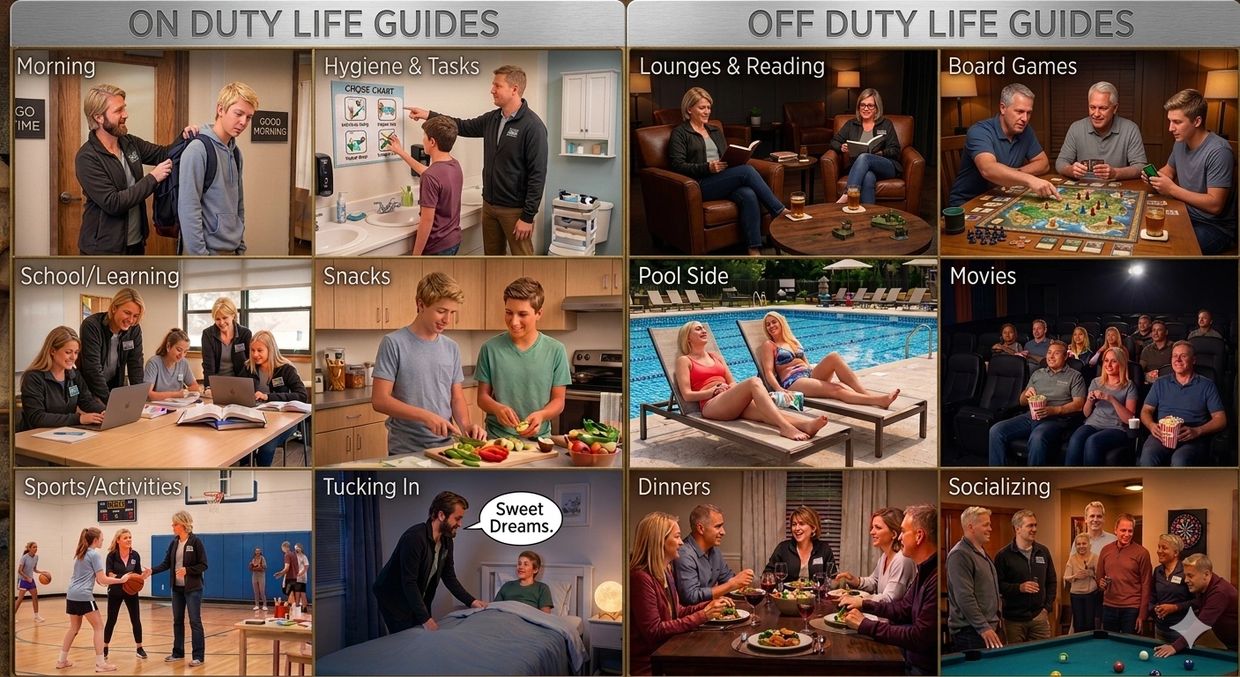
Life Guides work an intensive 3.5-day (84-hour) shift followed by 3.5 days off. Each on-shift covers a full daily cycle:

•  Morning and afternoon learning sessions (8:00 AM–3:00 PM)

•  Evening recreation and activities (3:00–10:00 PM)

•  Night watch and overnight support (10:00 PM–6:00 AM)

This creates reliable, around-the-clock care while giving Life Guides substantial recovery time. Extended “doubles” (7 days) or “triples” (10.5–14 days) are available for those wanting longer blocks of time off to travel, visit other Arx communities, or pursue personal interests.


On-Shift Meals

While on duty, lifeguides eat all meals alongside the offspring in the communal dining halls. They share breakfast, lunch, and dinner with the children and teens, using these relaxed times to socialize, build stronger relationships, model good manners and conversation, encourage healthy eating, and engage in light-hearted discussions about the day’s activities, interests, and experiences.


Sleeping Arrangements

•  On shift: Life Guides sleep in private rooms located right next to the offspring dormitories, allowing quick response to nighttime needs or emergencies.

•  Off shift: They stay in comfortable staff dwellings on a separate floor or section of the arcology, providing clear separation between work and personal time.


Lead Life Guide Role

Each 3.5-day shift includes a rotating Lead Life Guide. Announced at the start of the shift (e.g., “Sven is the lead Life Guide this shift”), this person serves as the primary decision-maker, resolves issues, mentors fellow Life Guides, coordinates support staff, and maintains overall continuity across the full 84 hours. The role rotates regularly, giving many Life Guides valuable leadership experience.


Shift Change Handovers 

At the end of each 3.5-day shift, Life Guides conduct efficient small-group handovers to the new shift of on duty Life Guides. These focused 30-minute meetings review key events, individual offspring needs, and any ongoing concerns. During the handover, traveling trainers and administrators engage the offspring with age-appropriate activities, ensuring seamless, uninterrupted care. In larger arcologies, handovers are staggered throughout the day to keep workloads balanced.


Support Tools & Structured Approach

Life Guides operate within a highly organized system supported by a central digital scheduling app. In advanced facilities, smart glasses provide real-time scripts, reminders, and data tailored to each task and age group. This precision helps Life Guides build strong trusting relationships, respond quickly to individual needs, manage group dynamics calmly, balance structure with opportunities for autonomy, and continuously improve their guidance.


Life Beyond the Shift

On their 3.5 days off, Life Guides enjoy personal time, rest, hobbies, socializing, and the freedom to explore other parts of the arcology or visit sister communities. Weekends and holidays during on-shifts often involve community games, celebrations, and shared experiences, keeping the role engaging and meaningful.


This 3.5-day rhythm creates a sustainable, high-quality caregiving system that supports both the offspring and the Life Guides. It combines purpose-driven structure with personal balance, making Life Guiding a rewarding long-term vocation in the Arx.

Technology should serve human connection, not replace it. Our wearables are tools to keep hands free and minds present, allowing guides and children to look at the world and each other—not down at a screen.


Arx Revolution

Life Guide Tech Assistance Tools

Life Guide Tech Assistance Tools

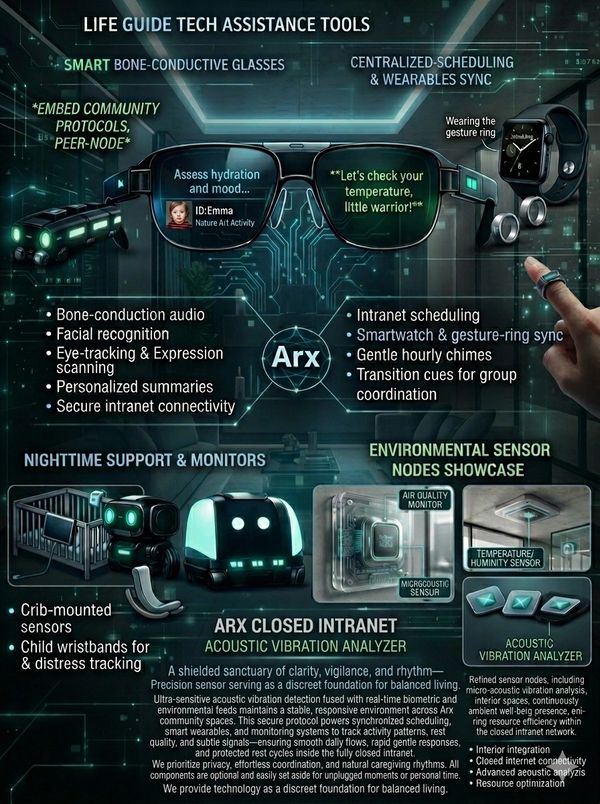
Life Guides in the Arx system balance intensive caregiving with personal rest through a 3.5-day on/off cycle. A suite of thoughtfully designed, intranet-only technology tools supports them in delivering attentive, personalized care to offspring while preserving natural awareness, hands-free operation, and cultural focus. These tools enhance—not replace—human connection, making daily interactions safer, more responsive, and deeply individualized.


Smart Glasses With "Life Guide Assist": Bone-Conduction Audio, HUD Guidance, and Recognition Features

The core tool is a sleek pair of smart glasses featuring advanced bone conduction technology. Sound travels through gentle vibrations against the cheekbones to the inner ear, delivering clear audio while keeping the ears completely open to ambient surroundings. This design is ideal for outdoor activities and group supervision—Life Guides can hear a child’s voice, footsteps, or environmental cues at all times.

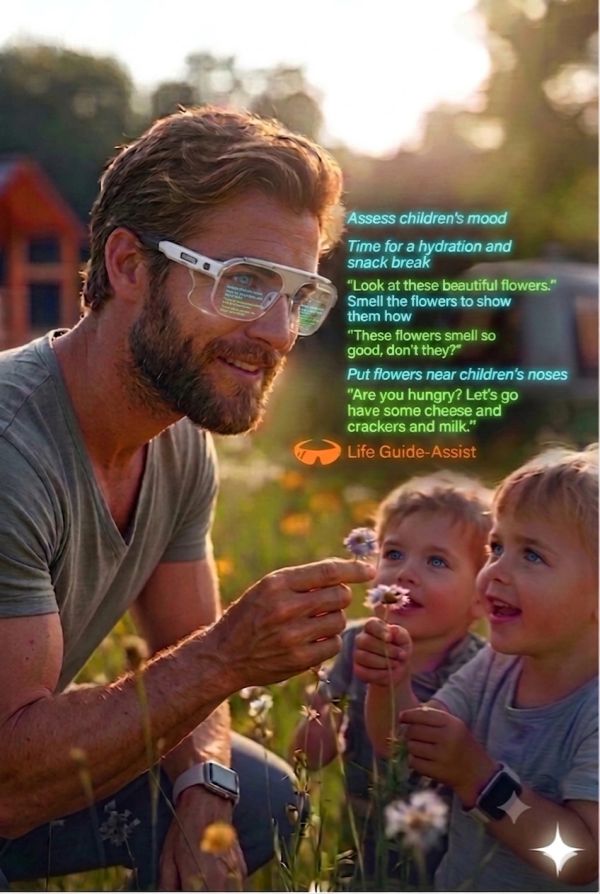
The lightweight aviator-style frames include tinted or polarized lenses for eye protection. A discreet heads-up display (HUD) shows:

•  Italicized blue text for private guidance to the Life Guide (e.g., Assess hydration and mood).

•  Bold green text for verbatim phrases to speak to offspring (e.g., “Let’s check your temperature, little warrior!”).

Built-in directional microphones and advanced software add powerful capabilities:

•  Real-time facial recognition with eye-tracking (the glasses identify the exact child a Life Guide is looking at, even in a group).

•  Facial expression scanning to detect emotions like fatigue, confusion, or joy.

•  Voice recognition and contextual data for distinguishing similar-looking children.

•  Quick personalized summaries (e.g., “Emma showed strong interest in sculpting yesterday—suggest a nature-based art activity”).


Scenario Examples

A Life Guide notices two similar-looking children during a meadow activity. Eye-tracking and voice confirmation instantly clarify identities on the HUD, allowing seamless, personalized engagement without awkward pauses.

During a lesson, the glasses detect a child’s puzzled expression and display a simplified explanation prompt. The Life Guide delivers it naturally, turning potential frustration into a confident learning moment.

In the wild areas, a quick tap or voice command sends a secure message to another Life Guide (“Meet at the trailhead in ten minutes”) while bone-conduction confirms receipt—coordination without disrupting the group.

These features transform routine moments into attentive, individualized interactions that make each offspring feel seen and supported.

Centralized Scheduling App and Wearable Sync

Centralized Scheduling App and Wearable Sync

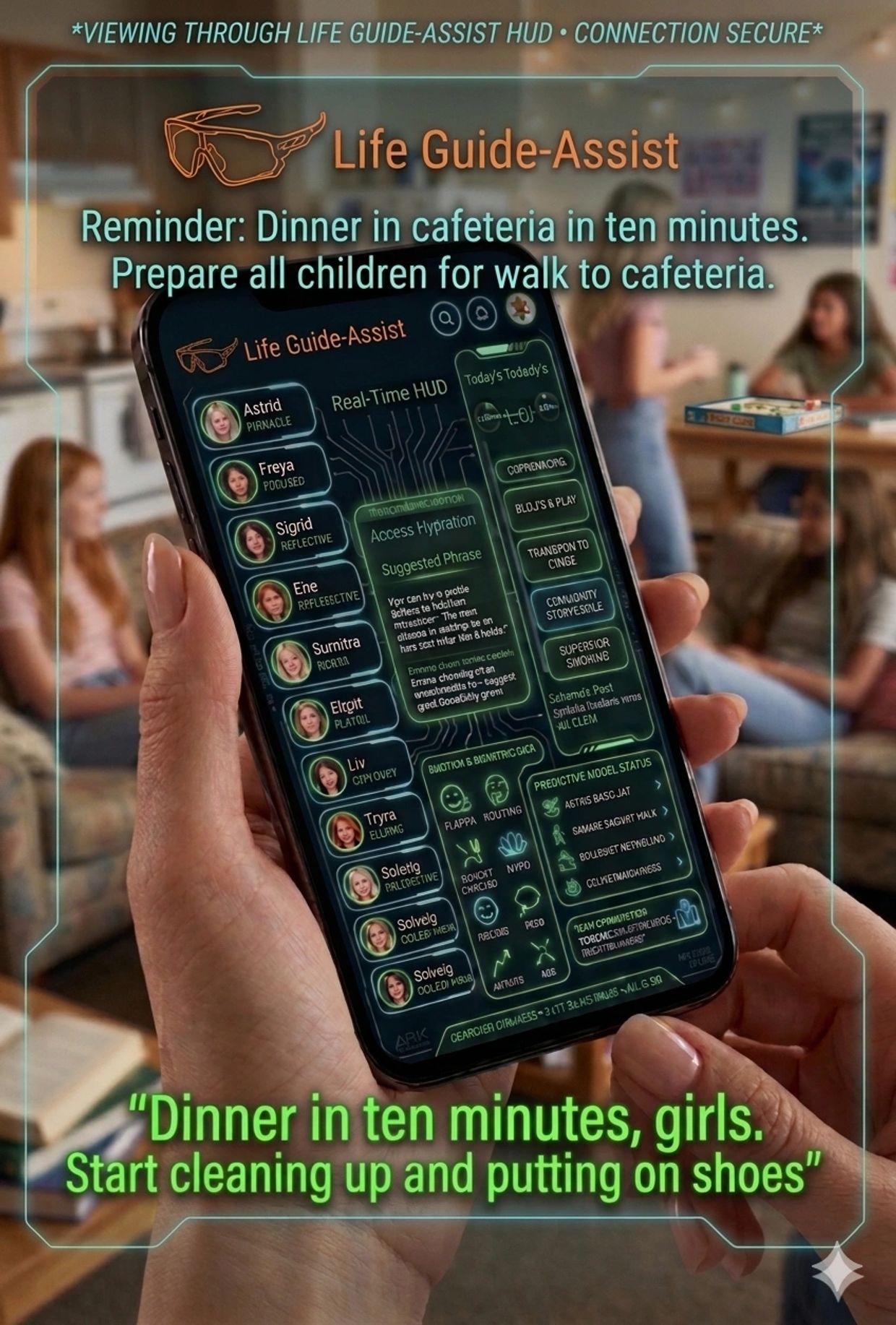
The scheduling app integrates with the smart glasses, smart watches, and gesture-control rings. It delivers gentle hourly chimes and timed reminders through bone-conduction audio and HUD text:

•  “Lunch in 10 minutes—start wrapping up your project and put on your shoes.”

•  Transition cues for activities, breaks, or group movements.

Smart watches provide vibration alerts and quick data glances. Gesture rings allow swipe or pinch commands to log milestones, call support, or summon assistance—keeping hands free for holding, comforting, or guiding.

Scenario

Five minutes before lunch, the app sends a synchronized cue. The Life Guide calmly directs the group using the suggested phrasing on the glasses. Transitions feel orderly and positive rather than chaotic.


Nighttime Support Tools: Monitors and Autonomous Units

For night watch, specialized tools protect rest for both Life Guides and offspring:

•  Baby sleep monitors (crib-attached) and young child wristbands track breathing, movement, and distress with solar-powered sensors.

•  Autonomous Nighttime Care Units (ANCUs)—compact, quiet robots—patrol dorm areas, provide gentle soothing (lullabies, rocking), and escalate only real needs via watch alerts to the on-call Life Guide.

Life Guides sleep in separate or open areas with general awareness, awakened only when truly needed. This guarantees substantial rest across the cycle while maintaining safety.

Scenario

An infant stirs at 2 AM. The monitor sends a targeted alert with guidance text and audio. The Life Guide responds calmly, offers comfort using a personalized script, and returns to rest—offspring feel secure without constant adult wakefulness.


Additional Supportive Tools

•  Portable first-aid drones deliver supplies quickly during outdoor play.

•  Environmental sensors monitor air quality and hazards in green spaces.

•  Lifeguide health patches track personal stress levels for timely breaks.

All tools operate on a closed intranet for security and focus, with easy removal during bathing, socializing, or intentional tech-free time.ecosystem.

Additional Supportive Tools

•  Portable first-aid drones deliver supplies quickly during outdoor play.

•  Environmental sensors monitor air quality and hazards in green spaces.

•  Lifeguide health patches track personal stress levels for timely breaks.

All tools operate on a closed intranet for security and focus, with easy removal during bathing, socializing, or intentional tech-free time.

How These Tools Improve Life Guide–Offspring Interactions

Together, the tools enable Life Guides to:

•  Offer highly personalized attention using real-time insights and suggested phrasing.

•  Maintain full environmental awareness and hands-free mobility.

•  Coordinate smoothly with peers during group activities.

•  Respond to needs faster while protecting everyone’s rest and well-being.

•  Preserve natural, human-centered caregiving rather than replacing it.

These technologies support the Arx vision of attentive, nature-connected upbringing—empowering Life Guides to excel in their vital role while modeling balance, awareness, and presence for the next generation. They are practical extensions of care, designed for real daily life in the Arx communities.


Life Guide Tech Assistance Tools represent a harmonious fusion of thoughtful innovation and human warmth, carefully engineered to sustain the delicate balance between devoted caregiving and personal renewal within the Arx system. By augmenting natural awareness, streamlining coordination, and delivering precise, context-aware support, these intranet-only technologies empower Life Guides to remain fully present—offering each offspring the individualized attention, emotional responsiveness, and nurturing guidance they deserve. Far from diminishing human connection, the tools elevate it, transforming everyday moments into opportunities for deeper trust, joyful discovery, and secure growth. Ultimately, they serve as quiet allies in the Arx vision: enabling a new generation to thrive in nature-rich communities, guided by rested, focused, and deeply attentive Life Guides who model presence, balance, and genuine care for the future.   


As these tools become seamlessly woven into daily rhythms, they not only reduce cognitive load and physical strain but also free Life Guides to invest their energy where it matters most: in meaningful eye contact, spontaneous storytelling, and the quiet joy of shared discovery. Over time, this supported approach fosters greater consistency in caregiving, stronger community bonds among Life Guides, and a profound sense of fulfillment in their calling. In the end, the Life Guide Tech Assistance suite stands as a testament to the Arx philosophy—that technology, when thoughtfully designed and humbly placed in service of human connection, can help raise a generation that is both deeply rooted in the natural world and gently guided toward its fullest potential.

Life Guide-Assist

Life Guide-Assist: The Integrated Intelligence Layer

At the heart of the Arx Life Guide Tech Assistance suite is Life Guide-Assist, a secure, intranet-only AI companion software that seamlessly unifies the smart glasses, scheduling app, smart watches, gesture-control rings, health patches, environmental sensors, and Autonomous Nighttime Care Units. Designed as a quiet, always-available co-pilot rather than an autonomous decision-maker, Life Guide-Assist processes real-time data from all connected devices to deliver context-aware support, personalized recommendations, and effortless coordination—while keeping the Life Guide firmly in control of every interaction.


Core Capabilities

•  Unified Child Recognition & Profiling: Using eye-tracking, facial recognition, voice patterns, and movement signatures, the system instantly identifies any child in view (even identical twins or large groups) and surfaces a concise, glanceable profile on the HUD: age, recent interests, emotional tendencies, developmental goals, allergies, preferred soothing techniques, and yesterday’s highlights (e.g., “Liam excelled at balance tasks—consider obstacle course today”).

•  Real-Time Emotion & State Detection: Advanced facial micro-expression analysis, posture reading, voice tone, and biometric inputs from wristbands detect states such as fatigue, excitement, frustration, hunger, or sensory overload. The HUD responds with subtle italicized guidance (e.g., “Emma showing early overstimulation—suggest quiet breathing game”) and offers ready-to-speak green-text phrases calibrated to the child’s personality.

•  Personalized Activity & Learning Suggestions: Drawing from each child’s developmental map, observed interests, group dynamics, and current environmental conditions, Life Guide-Assist proposes tailored micro-activities in seconds: nature-based art for a child who loved sculpting yesterday, a calming sensory walk for an anxious child, or a collaborative building challenge for social-skill development.

•  Intelligent Scheduling & Transition Management: The software maintains a dynamic master schedule that syncs across all devices. It provides gentle bone-conduction chimes, HUD countdowns, and suggested narration scripts for smooth transitions. It automatically adjusts for weather, energy levels, or unexpected delays and sends synchronized cues to the entire team.

•  Inter-Life Guide Coordination: One-tap or voice-command messaging (“Need backup at the creek—two extra hands”), shared location pings, and group status awareness allow seamless handoffs and collaborative care without breaking focus on the children.

•  Health & Safety Monitoring: Continuous integration with wearable sensors, air-quality monitors, and first-aid drones. Predictive alerts flag rising stress in a Life Guide, dehydration risks in children, or environmental hazards. Automatic escalation to on-call support or ANCUs when needed.

•  Milestone Logging & Progress Tracking: Hands-free voice or gesture commands instantly log observations (“Liam climbed three rungs unaided—gross motor milestone met”). The system compiles private daily/weekly summaries for each child and suggests follow-up activities to reinforce growth areas.

•  Nighttime & Rest Optimization: During on-call shifts, Life Guide-Assist filters alerts to only genuine needs, provides targeted response scripts, and tracks sleep quality for both Life Guides and offspring to optimize the 3.5-day cycle.

•  Voice & Gesture Command Suite: Natural voice interaction (“Show me quiet activities for ages 3-4”) or subtle ring gestures (swipe to log, pinch to message, double-tap for emergency) keep hands free for holding, comforting, or demonstrating.

•  Adaptive Learning & Customization: The software quietly improves over weeks and months by learning a Life Guide’s preferred phrasing style, common interventions, and group flow patterns—always with full manual override and privacy controls.

•  Tech-Free Mode & Privacy Controls: A single gesture or voice command pauses all HUD elements and notifications for intentional unplugged time, bathing, or deep presence moments. All data remains strictly within the closed Arx intranet.


Life Guide-Assist operates with deliberate humility: every suggestion appears as optional guidance, never a directive. Its primary purpose is to reduce mental load, eliminate guesswork in large groups, and give Life Guides more cognitive and emotional bandwidth for genuine connection, spontaneous play, and the irreplaceable human warmth that technology can support—but never replace. Through this intelligent, interconnected layer, Life Guides experience their role as more sustainable, responsive, and joyful, while every offspring receives care that feels magically attuned to their unique needs and rhythms.

In the Arx model, Pod Mentors function much like grandparents, serving as a stable, permanent presence who offer wisdom and emotional grounding across every stage of a child’s development.


Arx Revolution

The Role of Pod Mentors in Arx Society

Pod Mentors

The Role of Pod Mentors in Arx Society: Fostering Continuity and Secure Attachment


In the communal child-rearing system of Arx, the assignment of pod mentors constitutes a vital mechanism for providing lifelong emotional continuity and relational stability to offspring. This role complements the structured progression through age-specific life guides by introducing a consistent, intergenerational presence that spans the entire developmental trajectory from infancy to adulthood. Pod mentors serve as enduring figures akin to grandparents, offering wisdom, narrative heritage, and dedicated companionship that reinforce secure attachment and social cohesion within the broader Arx framework.

The formation of pods begins at birth with the pairing of each offspring with a designated “twin,” either biological or selected to create a foundational dyadic bond. This twin relationship establishes the nucleus of an offspring’s social circle, emphasizing mutual support and primary affiliation from the earliest moments. Subsequently, two such twin pairs are combined to constitute a pod of four offspring. This quad forms a network analogous to sibling relationships, cultivating deep, enduring connections that serve as the core of interpersonal ties throughout life. The pod structure promotes shared experiences, collective identity, and reciprocal care, laying a robust foundation for social development.

Upon the pod’s formation, a dedicated pod mentor is assigned. Pod mentors are typically semi-retired life guides who have completed extensive service—specifically, having guided cohorts across two full eighteen-year cycles, equivalent to thirty-six years of active contribution. Although life guides specialize in particular age groups and maintain consistent ratios within those brackets, the system ensures equity in overall impact: the total number of offspring raised is calculated by dividing the aggregate number of life guides by the total offspring population. This equalization allows every life guide, regardless of the age-specific ratio they manage, to claim an identical lifetime contribution to rearing. Upon semi-retirement, many transition into the pod mentor role, bringing accumulated expertise and perspective to their assigned pod.

The responsibilities of pod mentors center on providing qualitative, rather than intensive daily, guidance. They impart accumulated wisdom drawn from decades of observation across multiple cohorts, share stories that transmit cultural knowledge and historical continuity, and engage in meaningful, unhurried interactions with their pod members. These activities—ranging from storytelling sessions to reflective discussions and shared leisure—occur throughout the offspring’s life, independent of the shifting life guide assignments as cohorts advance through developmental stages. The pod mentor’s presence thus offers a stable anchor amid the structured transitions of age-group-specific care.

This continuity fulfills several critical functions within Arx society. Foremost, it facilitates secure attachment by ensuring that offspring maintain a reliable, affectionate relationship with an adult figure who remains constant over time. In a system where primary caregiving shifts with age, the pod mentor counters potential fragmentation by embodying permanence and unconditional regard. The grandparent-like dynamic further enriches emotional development, allowing offspring to experience intergenerational respect, patience, and perspective that complement the more task-oriented guidance of active life guides.

Moreover, pod mentors reinforce the communal ethos of Arx by bridging generational divides and preserving collective memory. Through narratives and personal histories, they transmit values, lessons from past cohorts, and a sense of shared destiny, strengthening societal cohesion. The role also optimizes resource allocation: by drawing from semi-retired life guides, Arx effectively utilizes experienced individuals whose capacity for high-intensity care has diminished, while channeling their strengths toward mentorship that requires depth rather than volume.

In essence, pod mentors represent an indispensable element of the Arx social architecture. By providing enduring relational continuity, they safeguard emotional security, enhance intergenerational transmission, and sustain the pod as a lifelong unit of belonging. This thoughtful integration of long-term mentorship within a cohort-progressive system exemplifies the deliberate design of Arx child-rearing, wherein structured efficiency and profound human connection are harmoniously balanced to nurture resilient, interconnected individuals.

In the societal framework of Arx, the cultivation of secure attachment styles and healthy psychosocial development among offspring is achieved through a multifaceted system that extends beyond the foundational roles of life guides and pod mentors. This approach is meticulously designed to align with Erik Erikson’s stages of psychosocial development, optimizing progression from infancy through adolescence. By integrating evidence-based psychological principles with communal structures, Arx ensures that offspring develop trust, autonomy, initiative, industry, and a coherent identity, while minimizing risks of mistrust, shame, guilt, inferiority, and role confusion. The following outlines key additional measures employed to this end.

Creating Secure Attachment Styles

Arx's Erikson-Aligned Offspring Development System

Integrated Cohort-Based Milestones and Assessments


Arx implements a cohort-wide system of developmental milestones, calibrated to Erikson’s stages, which facilitates collective monitoring and intervention. During the trust versus mistrust stage (infancy, approximately 0-18 months), life guides prioritize responsive caregiving, such as consistent feeding and soothing routines, to foster a sense of security. To enhance this, Arx employs biofeedback monitoring—non-invasive wearable devices that track physiological indicators like heart rate variability and cortisol levels—allowing for real-time adjustments to ensure attachment security. As cohorts advance to the autonomy versus shame and doubt stage (toddlerhood, 18 months-3 years), environments are structured to encourage self-directed exploration, with safe, modular play spaces that promote decision-making without over-correction. Regular assessments, conducted quarterly by interdisciplinary teams including psychologists and life guides, identify any deviations from optimal development, enabling targeted interventions such as peer modeling within pods to reinforce positive behaviors.


Peer and Pod Dynamics for Social Reinforcement


Building on the pod structure of four offspring (comprising two twin pairs), Arx leverages peer interactions as a deliberate tool for psychosocial growth. In the initiative versus guilt stage (preschool years, 3-5 years), pods engage in collaborative projects, such as communal storytelling or group problem-solving activities, guided by life guides to encourage leadership without fostering excessive competition. This setup mitigates guilt by emphasizing collective success, aligning with Erikson’s emphasis on purposeful action. For the industry versus inferiority stage (school age, 6-11 years), Arx introduces mentorship rotations within cohorts, where older pod members temporarily guide younger ones in skill-based tasks, such as artisanal crafts or basic sciences. This not only builds competence and self-esteem but also strengthens secure attachments through reciprocal relationships, reducing the likelihood of inferiority complexes. Pods remain intact lifelong, providing a stable social network that evolves with developmental needs, thus supporting identity formation in adolescence (identity versus role confusion, 12-18 years) by offering a consistent reference group for self-exploration.


Holistic Wellness Protocols and Environmental Design


To further secure healthy development, Arx incorporates comprehensive wellness protocols that address physical, emotional, and cognitive domains across all stages. Nutritional and sleep regimens are optimized using data-driven algorithms, ensuring that biological foundations underpin psychosocial progress—for instance, omega-3 enriched diets during early stages to support brain development and trust-building. Environmental design plays a pivotal role: living spaces transition from nurturing, enclosed nurseries in infancy to expansive, challenge-oriented arenas in later childhood, mirroring Erikson’s progression toward greater independence. Therapeutic modalities, such as mindfulness sessions adapted for age groups, are integrated to process emotions and build resilience, particularly during transitions between life guide phases. In adolescence, individualized identity workshops—facilitated by pod mentors and supplemented by virtual reality simulations of adult roles—allow offspring to experiment with identities in a low-stakes environment, optimizing resolution of role confusion.


Community-Wide Feedback Loops and Lifelong Continuity


Arx maintains systemic oversight through community feedback loops, where aggregated data from cohort assessments informs iterative improvements to the rearing model. This ensures that measures remain adaptive to emerging needs, such as adjusting pod activities based on cohort-specific attachment patterns identified via standardized inventories like the Adult Attachment Interview adapted for youth. Furthermore, the involvement of the broader adult population—through voluntary “attachment ambassadors” who offer occasional interactions—broadens the relational web, providing diverse role models that enrich Erikson’s generativity aspect indirectly during offspring years. As offspring approach maturity, transitional ceremonies mark stage completions, reinforcing a sense of accomplishment and continuity.

These measures collectively create a robust ecosystem in Arx, where secure attachment is not incidental but engineered through intentional, stage-aligned strategies. By prioritizing empirical monitoring, peer reinforcement, environmental optimization, and adaptive feedback, Arx facilitates offspring development that is both healthy and efficient, yielding individuals equipped for societal contribution.

In the societal structure of Arx, interactions between offspring and their past and future life guides—facilitated through organized events such as gatherings, reunions, get-togethers, lunches, and festivals—serve a critical function in cultivating secure attachment styles and fostering an extended family dynamic. These engagements extend beyond the cohort-progressive model of age-specific life guides, introducing deliberate opportunities for relational continuity and broadened social networks. This approach aligns with psychological principles of attachment theory, emphasizing multiple secure bases, while reinforcing the communal ethos of Arx.


Enhancing Secure Attachment Through Relational Continuity


Secure attachment, as conceptualized in developmental psychology, relies on consistent, responsive relationships that build trust and emotional resilience. In Arx, the sequential nature of life guides—where cohorts transition from one specialized group to the next—could potentially introduce disruptions if not mitigated. Interactions with past life guides address this by allowing offspring to revisit familiar caregivers, thereby reinforcing established bonds and providing reassurance during periods of change. For instance, annual reunions with former infant or toddler guides enable offspring to experience affirmations of past nurturing, which mitigates any residual anxiety from transitions and strengthens internal working models of reliability.

Conversely, engagements with future life guides introduce anticipatory familiarity, easing upcoming shifts by humanizing the next developmental phase. Pre-transition gatherings, such as introductory lunches or festivals themed around cohort milestones, permit offspring to form preliminary attachments, reducing uncertainty and promoting a sense of predictability. These interactions collectively expand the attachment network, distributing emotional support across a wider array of adults and aligning with Erik Erikson’s stages by supporting trust in early years and identity cohesion in adolescence. Empirical monitoring within Arx, including attachment assessments, confirms that such events correlate with lower incidences of insecure patterns, as they provide ongoing validation and emotional scaffolding.

Intergenerational Caregiving within arx

The Role of Offspring in Intergenerational Caregiving within Arx Society

In the communal framework of Arx, the involvement of offspring in the care of younger cohorts constitutes a fundamental component of daily life, promoting both developmental reciprocity and societal cohesion. This system, integrated into the structured schedules of all age groups, draws upon historical precedents in human social organization where older children have traditionally assumed supportive roles in family and community settings. By assigning age-appropriate responsibilities to offspring, Arx not only expands the effective network of caregivers but also imparts essential skills for future integration into the broader societal network, including potential roles as life guides. This essay examines the progression of these responsibilities across developmental stages, elucidates their psychosocial benefits, and underscores their alignment with enduring human practices.


The arrangement begins with younger offspring, who engage in rudimentary tasks tailored to their emerging capabilities, thereby fostering a sense of agency and contribution from an early age. For instance, children in the preschool years (approximately ages 4-5) might assist life guides with infants and toddlers by performing simple errands, such as retrieving a feeding bottle or distributing toys during group activities. These interactions are accompanied by affirmative feedback, such as acknowledgments of being a “good helper,” which reinforces positive self-perception and encourages prosocial behavior. Such minimal yet meaningful involvement aligns with Erik Erikson’s initiative versus guilt stage, where purposeful actions build confidence without overwhelming the child. In Arx, these tasks are embedded within daily routines, ensuring they remain educational rather than burdensome, and they serve to familiarize young participants with the caregiving ethos that permeates the society.

As offspring advance to middle childhood (ages 6-11), their roles evolve to encompass behavioral modeling and more direct assistance, enhancing the developmental environment for younger groups. During this period, corresponding to Erikson’s industry versus inferiority stage, offspring demonstrate appropriate conduct—such as patience in play or conflict resolution—while aiding in supervised activities like reading sessions or basic hygiene routines for preschoolers. This modeling not only provides practical support to life guides but also exposes younger offspring to relatable peer exemplars, facilitating social learning through observation and imitation. The integration of these duties into schedules, perhaps allocating designated hours for cross-cohort interactions, cultivates empathy and responsibility, preparing individuals for more complex societal contributions. Consequently, this phase strengthens the de facto caregiving network, as younger offspring benefit from a multiplicity of influences beyond dedicated adults, promoting resilience through diversified attachments.

In the adolescent years (ages 12-17), teenagers assume comprehensive responsibilities, assisting across all age groups and thereby gaining multifaceted experience essential for adult integration. Aligned with the identity versus role confusion stage, these duties might include leading group exercises for toddlers, tutoring school-age children in foundational skills, or facilitating discussions among peers. Such broad engagement equips teenagers with practical insights into developmental psychology and group dynamics, serving as a preparatory apprenticeship for potential life guide positions, regardless of their eventual vocational path. The system ensures equity by rotating assignments, preventing overcommitment while maximizing exposure. This hands-on involvement not only refines leadership abilities but also instills a profound understanding of the Arx network’s interconnectedness, where every member contributes to collective well-being.


The benefits of this intergenerational caregiving model extend beyond individual development to enhance the overall social fabric of Arx. For younger offspring, the expanded network of caregivers—encompassing peers and near-peers—fosters secure attachments by providing additional sources of support and affection, mitigating dependency on singular figures. This multiplicity aligns with attachment theory, which posits that diverse, responsive relationships bolster emotional security. For the caregivers themselves, these experiences accelerate maturation, teaching patience, communication, and adaptability—skills indispensable for full societal integration. Historically, such arrangements have been integral to human societies, from indigenous communities where siblings rear younger kin to agrarian families relying on child labor contributions. In Arx, this tradition is formalized and optimized, ensuring it supports rather than exploits participants, thereby sustaining a harmonious, efficient structure.


In conclusion, the incorporation of offspring into caregiving roles within Arx represents a deliberate strategy that spans developmental stages, from simple tasks in early childhood to comprehensive assistance in adolescence. This approach not only augments the caregiving network and enriches attachment experiences but also equips individuals with vital competencies for life guide roles and broader societal participation. By echoing time-honored human practices, Arx exemplifies a balanced, forward-thinking model of communal rearing that prioritizes mutual growth and enduring connectivity.

Arx Extended Family Dynamic

Arx Extended Family Dynamic

Cultivating an Extended Family Dynamic


The extended family feel in Arx emerges from these interactions by transforming life guides from transient specialists into enduring relational figures, akin to aunts, uncles, or extended kin in traditional societies. Unlike the nuclear focus of pod mentors, who offer grandparent-like continuity, these events create a web of intergenerational connections that emphasize collective belonging. Festivals, for example, might involve multi-cohort activities where past guides share stories of previous groups, instilling a historical sense of lineage and shared heritage. Get-togethers or informal lunches facilitate casual, affection-based exchanges, such as mentorship on personal challenges, which deepen emotional ties and model healthy relational norms.

This structure mitigates the potential isolation of a guide-specialized system by promoting a village-like environment, where offspring perceive the entire cadre of life guides as an expansive support system. It encourages reciprocity as offspring mature, with adolescents potentially assisting in events for younger cohorts, thereby fostering generativity and a cyclical sense of family obligation. Such dynamics not only enhance social cohesion but also buffer against developmental stressors, ensuring offspring develop with a robust sense of community integration.

In summary, these interactions play an indispensable role in Arx by bridging temporal gaps in the life guide system, thereby solidifying secure attachments through continuity and predictability while evoking an extended family atmosphere via broadened, affectionate networks. This intentional design optimizes psychosocial outcomes, contributing to the overall resilience and harmony of Arx society.

Copyright © 2026 Arx Revolution - All Rights Reserved.

Powered by

  • Privacy Policy

This website uses cookies.

We use cookies to analyze website traffic and optimize your website experience. By accepting our use of cookies, your data will be aggregated with all other user data.

DeclineAccept